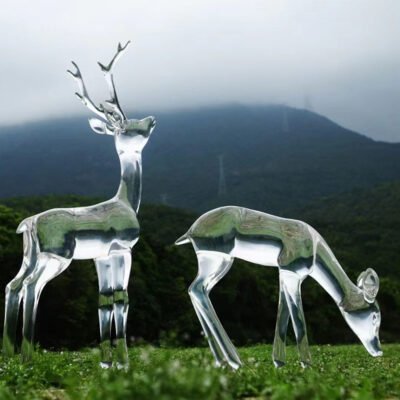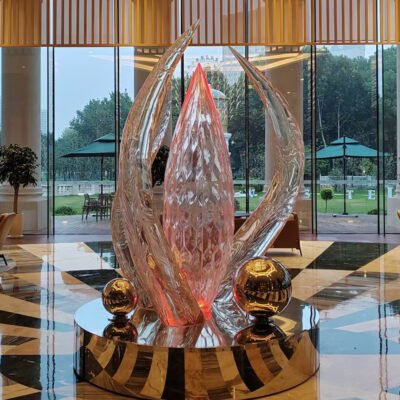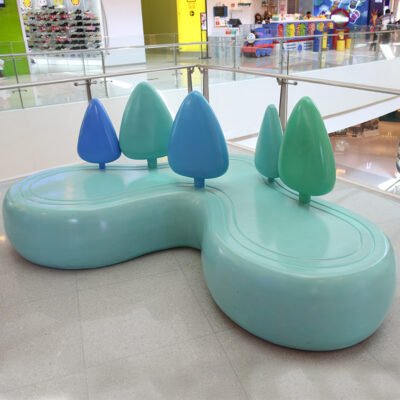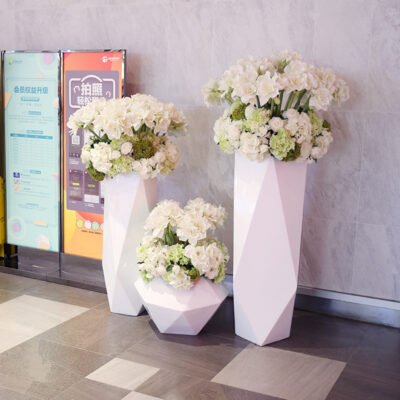
When it comes to commercial landscaping, municipal streetscapes, rooftop gardens, and coastal outdoor projects across Australia, GRC planters are the top choice for lightweight strength and versatile aesthetics. Yet many project owners and landscapers overlook one critical detail that separates long-lasting premium GRC from fast-failing ordinary products: AR alkali-resistant glass fibre.
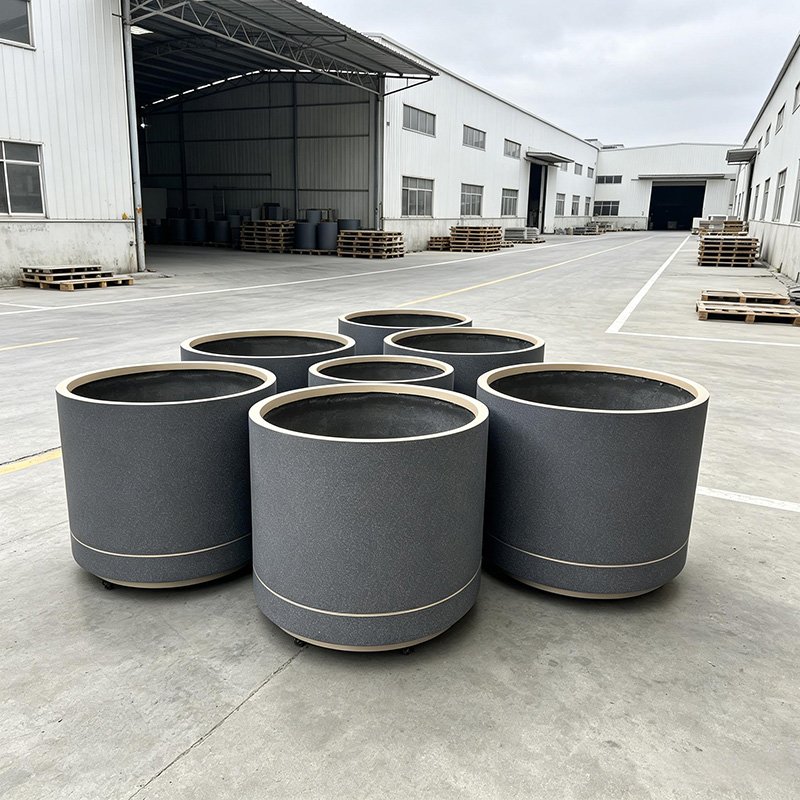
A frequent question from Australian clients is always the same: “Does your GRC use AR alkali-resistant glass fibre?”
This is not a trivial technical inquiry—it is the core standard that determines the structural durability, weather resistance, and decades-long service life of GRC planters in Australia’s harsh outdoor environments.
Ordinary E-glass fibre, commonly used in low-cost generic GRC products, cannot adapt to the extreme alkaline environment of cement matrix (pH 12.5–13.5). In just a few years, standard glass fibre will be gradually eroded, dissolved and weakened, causing GRC planters to develop hidden cracks, surface peeling, strength attenuation and even structural failure. For Australian outdoor projects that require 5–10 years of stable performance, such inferior materials are completely unqualified.
Our GRC planters exclusively adopt high-zirconium AR alkali-resistant glass fibre (zirconia content ≥16%), fully complying with Australian NPCAA GRC manufacturing specifications and international GRCA industry standards. Engineered to resist cement alkaline corrosion, our AR fibre retains over 90% of its original tensile strength after long-term service, effectively solving the core pain point of fibre aging and structural degradation for traditional GRC products.
Tailored for Australia’s unique and harsh climatic conditions, AR fibre reinforced GRC delivers unmatched comprehensive performance:
Ultra-strong UV & high-temperature resistance Australia’s intense ultraviolet radiation and extreme temperature swings easily age ordinary GRC. Our AR fibre structure remains stable under continuous strong sunlight and alternating hot and cold climates, preventing pulverization, fading and cracking.
Coastal salt-fog corrosion resistance For seaside projects in Sydney, Gold Coast and Perth, salt erosion is the biggest killer of outdoor landscape facilities. AR fibre’s stable chemical structure resists chloride ion penetration and salt-fog corrosion, keeping planters intact for years in humid and saline coastal environments.
Structural toughness & crack resistance AR fibre forms a three-dimensional uniform reinforcement network inside the concrete matrix, greatly enhancing the flexibility and impact resistance of GRC planters. It effectively resists dry shrinkage and structural cracks caused by Australian dry-wet cycle climates, meeting the wind load and structural safety requirements of Queensland cyclone zones and municipal roadside projects.
Compliant with Australian engineering standards All our GRC products use standard AR alkali-resistant fibre, matching Australian commercial and municipal project acceptance criteria. Combined with strict low-water-absorption formula, professional UV waterproof sealing process and standard drainage structure design, our planters fully meet NCC building code requirements and support NATA-standard performance testing certification.
In the Australian landscape industry, AR alkali-resistant glass fibre is never an optional upgrade—it is a basic threshold for qualified high-quality GRC planters.
We refuse cutting corners with cheap ordinary fibre. Every GRC planter we produce adheres to strict Australian GRC manufacturing standards, taking structural durability and long-term weather resistance as the core quality benchmark. Whether for high-end hotel landscapes, urban municipal renovation, rooftop garden engineering or residential outdoor landscaping, our AR-reinforced GRC planters deliver stable, reliable and long-lasting value for every Australian project.
Choose genuine AR alkali-resistant GRC, choose Australian-standard durable landscape quality.